Precision Ceramics Blog
7 Best Reasons for Paint Decontamination
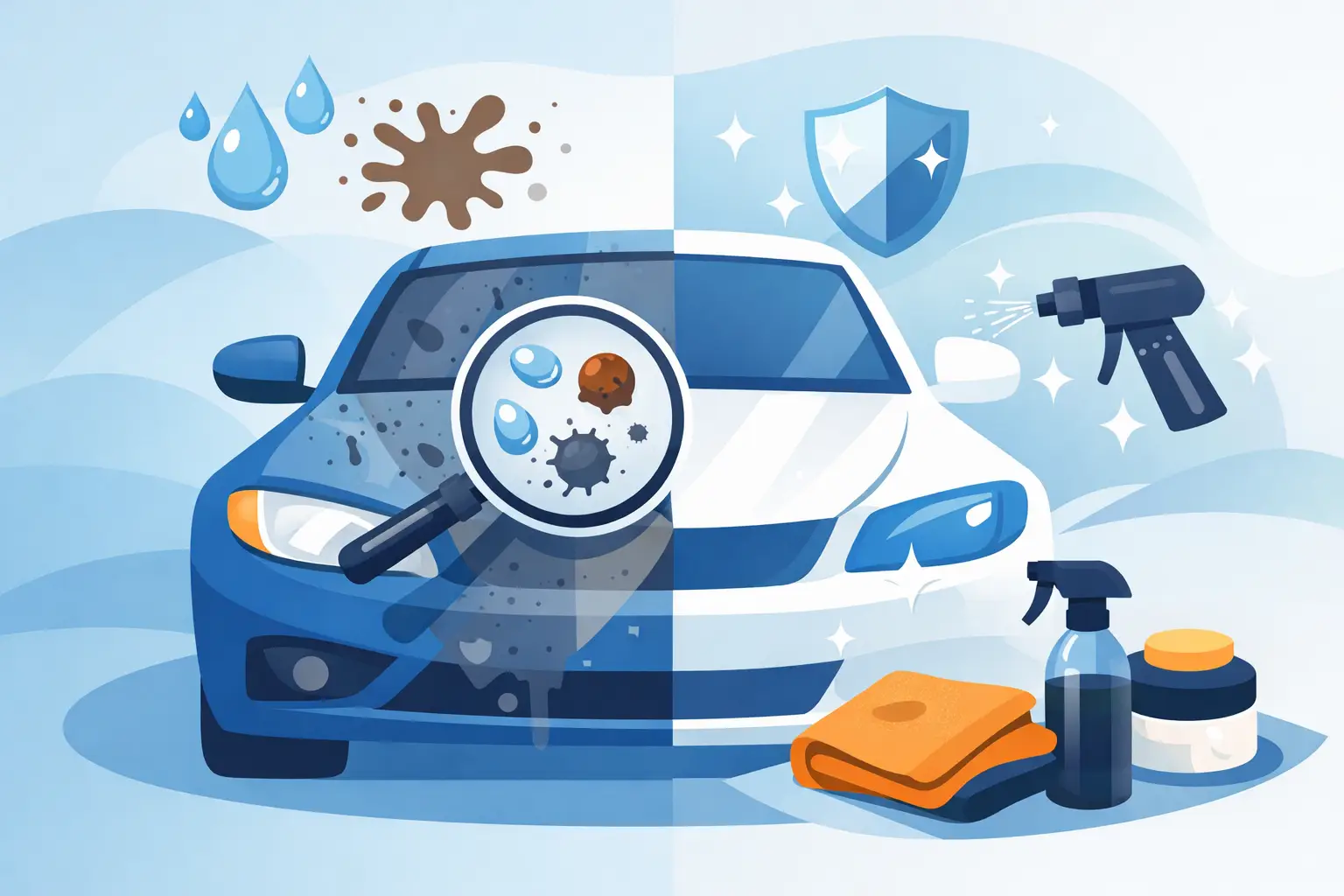
If your paint still feels rough after a wash, that is usually the first sign you are not dealing with dirt alone. Some of the best reasons for paint decontamination come down to what regular washing cannot remove – embedded fallout, rail dust, industrial contamination, tar, tree sap mist, and bonded grime that slowly compromise gloss, smoothness, and protection.
For owners who care about long-term finish quality, paint decontamination is not an extra. It is a preparation step that changes the result of everything that comes after it. Whether the goal is polishing, waxing, or installing a ceramic coating, the surface has to be genuinely clean before any protection can bond properly.
What paint decontamination actually removes
A normal wash removes loose dirt, traffic film, and fresh debris. It does not reliably remove bonded contamination that has attached itself to the paint, glass, trim, and wheels. That contamination can include iron particles from brakes and rail dust, road tar, mineral deposits, overspray, bug residue, and organic fallout that has had time to settle into the surface.
This matters because contamination does more than make paint feel gritty. It interferes with gloss, adds drag during polishing, and can create a false impression that the paint is in worse shape than it really is. In some cases, the opposite is also true – contamination can hide defects until the surface is properly cleaned and inspected under the right lighting.
The best reasons for paint decontamination before protection
The strongest reason to decontaminate paint is simple: protection performs better on a properly prepared surface. Waxes, sealants, and ceramic coatings are all surface-dependent. If contamination is left behind, you are asking a protectant to bond over a layer of embedded debris rather than clean paint.
That often leads to weaker adhesion, reduced durability, and less uniform results. A coating may still go on, but not at the standard a careful owner expects. When a vehicle, RV, trailer, or boat is being protected for the long term, skipping surface prep is where shortcuts begin to show.
There is also a visual benefit. A decontaminated surface reflects light more cleanly. The paint feels slicker, looks clearer, and allows polishing to refine the finish instead of fighting through bonded debris. On darker colors especially, that extra clarity can make a noticeable difference.
It creates a true starting point for correction
Paint correction is about removing or reducing defects in a controlled way. That process only works well when the surface has been stripped of contamination first. If iron particles or bonded fallout remain, they can be dragged across the paint during claying or machine polishing, increasing the risk of marring.
A proper decontamination process lets the technician see the paint honestly. Once the surface is clean, it becomes much easier to identify what is contamination, what is oxidation, and what is actual scratching or etching. That leads to better decisions about pad choice, polish selection, and how aggressive the correction really needs to be.
It helps preserve the finish, not just improve it
Many contaminants are reactive. Iron fallout, for example, can embed in the paint and contribute to tiny rust-colored specks over time. Mineral deposits can harden and leave behind etching. Organic matter can bake into the surface in heat.
Decontamination is not only cosmetic. It is part of preserving the finish before that contamination has more time to do damage. For owners trying to keep a newer vehicle in excellent shape, this is one of the smartest preventive steps available. For older paint, it can stop further deterioration before correction and protection are performed.
Why washing alone is not enough
One of the most common misconceptions is that a vehicle that looks clean is ready for wax or coating. It often is not. Paint can look good at a glance while still holding a surprising amount of bonded contamination.
The easiest way to notice it is by touch. After a proper wash and dry, lightly running a clean hand over the paint may reveal a rough, sandpaper-like texture. That roughness is exactly why washing alone is not enough. You can remove visible dirt and still leave behind contamination that affects gloss, protection, and polishing results.
This is especially common on daily driven vehicles, trucks, and trailers exposed to highways, industrial areas, winter roads, and construction zones. It is also common on boats and RVs where environmental exposure is constant and surfaces sit outside for extended periods.
Decontamination improves coating performance
If you are investing in a ceramic coating, paint decontamination should never be treated as optional. A coating is only as good as the surface underneath it. That is why professional installation is built around preparation, not just product application.
The coating needs a surgically clean surface to bond consistently. Any residue, fallout, or bonded material left behind can compromise that bond. The result may be reduced longevity, uneven behavior, or a finish that simply does not meet the standard of a premium service.
This is one area where process discipline matters. At Precision Ceramics, the difference is not just in the coating selected, but in the preparation standards behind it. That is where durability, gloss, and finish quality are actually built.
The trade-off: not every vehicle needs the same level of decontamination
This is where experience matters. Not every vehicle requires the same approach, and more aggressive decontamination is not automatically better. A lightly used garage-kept vehicle may need only a mild chemical and mechanical decontamination. A truck that sees winter roads, brake dust, and heavy mileage may need far more attention.
There is also a balance to maintain. Mechanical decontamination methods, such as clay treatment, can introduce marring if done improperly or when used more aggressively than necessary. That is why the right process usually starts with chemical decontamination to dissolve what can be safely removed before deciding how much physical contact is actually needed.
Good detailing is not about doing more for the sake of it. It is about doing the right amount, in the right order, for the condition of the surface.
When paint decontamination makes the biggest difference
Some vehicles benefit from paint decontamination more dramatically than others. If the paint feels rough, if you see orange specks on light colors, if water behavior has become inconsistent, or if the finish looks dull despite being washed, decontamination is usually warranted.
It is also especially valuable before seasonal protection, before polishing, after winter, and before selling a vehicle where finish presentation matters. For trailers, RVs, and boats, it can be an important reset step after long exposure to road grime, hard water, oxidation, and environmental fallout.
For enthusiasts and owners of high-value vehicles, there is another reason that often gets overlooked: decontamination helps you avoid wasting correction and protection work on an unprepared surface. If you are paying for premium results, the foundation should match.
Best reasons for paint decontamination if you want lasting results
The best reasons for paint decontamination are not based on hype. They are based on what actually affects finish quality over time. It removes what washing leaves behind, supports safer and more accurate correction, improves bonding for waxes and coatings, restores smoothness and clarity, and helps preserve the surface against longer-term damage.
Most important, it respects the value of the asset. Whether it is a daily driver, a classic car, a truck, an RV, or a boat, proper decontamination is one of those steps that separates quick cosmetic work from real finish care. It is not flashy, but it is foundational.
If you want the paint to look better and stay protected longer, start with a surface that is truly clean. Everything after that works the way it should.
Ready When You Are
Protect What You Drive
Ceramic coating, Waxoyl and Woolwax rust protection, and paint correction in Owen Sound. Get a free quote.