Precision Ceramics Blog
Paint Correction vs Repainting Explained
A vehicle can look tired for two very different reasons. Sometimes the paint is still there, but it is buried under swirl marks, oxidation, water spotting, and years of improper washing. Other times, the finish is simply failing – peeling clear coat, deep chips, rust breakthrough, or prior bodywork that has reached its limit. That is where the question of paint correction vs repainting matters, because the right choice depends on what is actually happening in the surface.
For owners who care about preserving value, appearance, and long-term protection, this decision should never be based on guesswork. A proper assessment looks at paint thickness, defect depth, panel condition, previous repairs, and the level of finish you expect when the work is done. In many cases, correction can transform a vehicle far beyond what people think is possible. In others, repainting is the only honest answer.
Paint correction vs repainting: what is the difference?
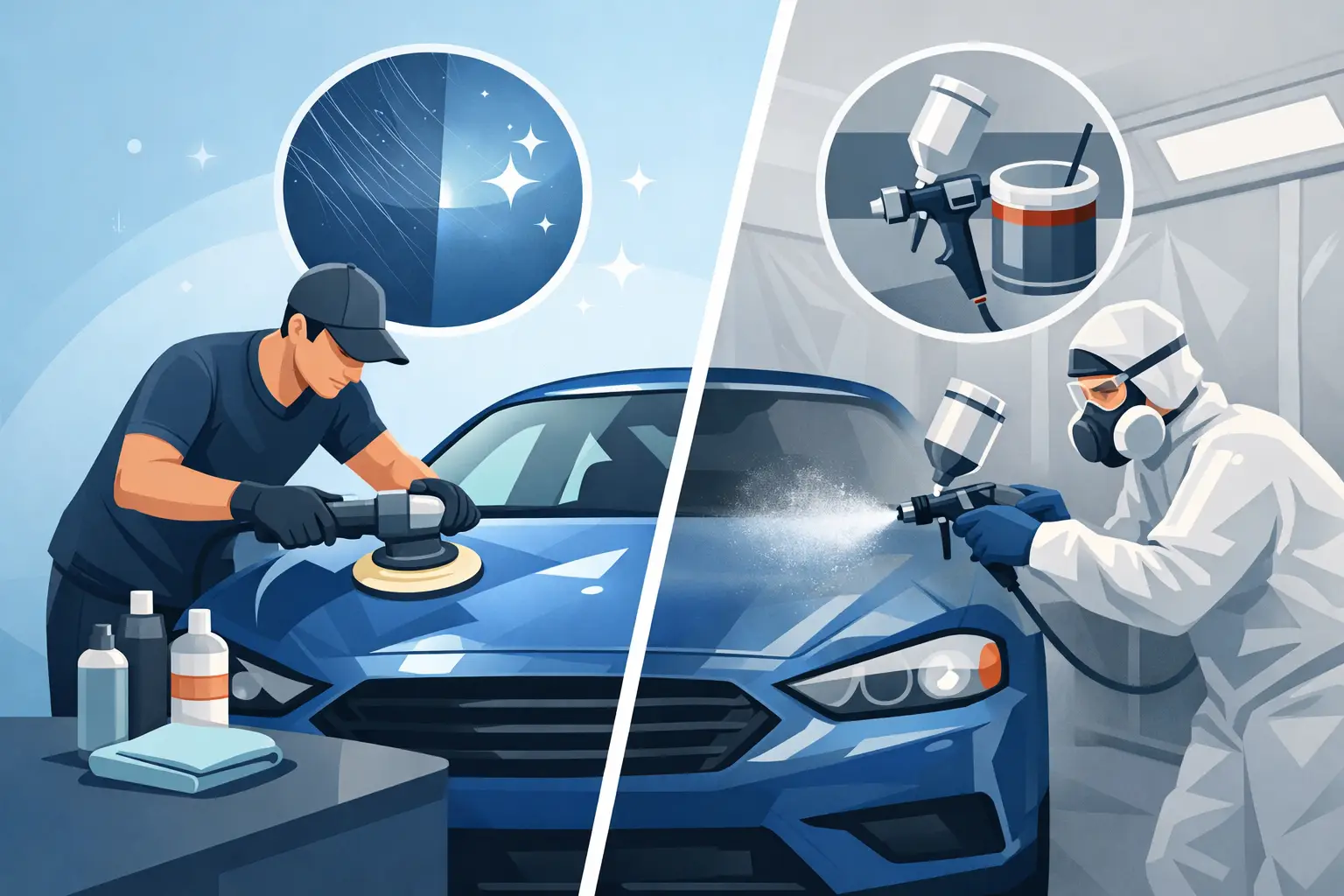
Paint correction is the process of refining and leveling the existing painted surface through machine polishing. The goal is to remove or reduce defects within the clear coat such as swirl marks, light scratches, haze, oxidation, etching, and dullness. It works with the paint already on the vehicle. Nothing is sprayed. Nothing is covered up. The finish is improved by carefully restoring clarity and gloss.
Repainting is different at a structural level. It involves sanding, repairing, priming, color application, and clear coat application to replace a damaged or failing finish. Repainting becomes necessary when the paint system itself is compromised or when damage is too deep to correct safely.
That difference matters because correction preserves original paint, while repainting replaces it. Original paint, when it is still healthy, is often the better surface to keep. Factory finishes are typically more consistent and durable than many aftermarket repaints, especially when the goal is long-term retention and a clean, uniform appearance.
When paint correction is the better choice
If the vehicle still has stable paint and clear coat, correction is usually the first option worth considering. This is especially true for daily drivers, trucks, SUVs, boats, trailers, and RVs that have lost gloss but do not have widespread coating failure.
A lot of surfaces look worse than they really are. Harsh washing, automatic brushes, improper drying, environmental fallout, and sun exposure can create a finish that appears worn out from a distance. Under proper lighting, those issues often turn out to be surface defects rather than paint failure. Once decontamination, compounding, and polishing are done correctly, the depth and reflection can return dramatically.
Correction also makes sense when the owner values original paint. On a newer vehicle, it is the best way to remove dealership-installed wash damage and restore a crisp finish before adding ceramic protection. On an older vehicle, it can recover gloss and richness without the cost, downtime, and variability of repainting.
There is also a major value difference. Repainting a complete vehicle is expensive, time-intensive, and highly dependent on the skill of the body shop, the prep standards, and curing conditions. Paint correction is still skilled labor, but when the surface is suitable, it delivers a strong visual improvement without replacing what is already working.
When repainting is the right call
Not every defect can be polished away. That is where honest surface evaluation matters.
If clear coat is peeling, correction will not fix it. If rust has broken through, polishing it will not stop corrosion. If scratches are through the clear and into the base coat or primer, correction may improve the surrounding area but cannot rebuild missing material. The same applies to deep impact chips, severe sanding marks from poor prior work, or panels with failed repaint work.
Repainting is usually the right path when the finish has crossed from cosmetic defect into material failure. That includes widespread delamination, serious UV breakdown, body damage, or repairs where color and clear need to be re-applied to restore the panel properly.
There is a trade-off, though. Repainting can solve major damage, but it also introduces variables. Color match can be excellent or merely acceptable. Orange peel texture can differ from adjacent panels. Dust nibs, overspray control, blending quality, and cure discipline all affect the final result. A repaint done well can look outstanding. A repaint done poorly can leave you with a surface that still needs correction after the paint work is complete.
Paint correction vs repainting: how to decide
The best decision comes from three questions.
First, is the paint still healthy enough to work with? If paint thickness is adequate and the defects sit within the clear coat, correction is often viable. If the finish is unstable or missing, repainting is more realistic.
Second, what level of improvement are you expecting? Correction can create a major transformation, but it does not make deep chips disappear or replace missing paint. If your expectation is a near-new finish on a panel with major failure, repainting may be necessary. If your goal is to remove haze, recover gloss, and dramatically improve overall appearance, correction may be exactly the right service.
Third, are you trying to preserve or replace? Owners of well-kept vehicles, classics, and premium daily drivers often prefer to preserve original surfaces whenever possible. That approach aligns with long-term value and authenticity. Repainting is often best reserved for areas where preservation is no longer possible.
Why prep and inspection matter more than the service name
A lot of disappointment in this industry comes from the wrong service being sold for the wrong condition. A quick polish is not paint correction. A cheap repaint is not restoration. Results come from diagnosis, preparation, and execution.
Before any polishing step, the surface should be washed, chemically decontaminated, and mechanically decontaminated if needed. Defects need to be inspected under proper lighting. Paint depth readings help identify repainted panels, thin areas, and safe correction limits. Test spots determine the least aggressive process that will achieve the target result.
The same logic applies to repainting. Surface prep, repair quality, panel straightness, contamination control, and cure conditions are what separate a durable finish from a short-lived one. The process matters at every stage.
This is one reason many owners choose correction first. When the paint can be saved, a disciplined correction process often produces a cleaner, truer result than replacing large sections of finish unnecessarily.
Cost, downtime, and long-term value
Cost should not be the only factor, but it is part of the equation. Paint correction is generally far less expensive than a quality repaint, especially when multiple panels or a whole vehicle are involved. It also avoids the extended downtime and body shop variables that come with refinishing.
Long-term value is where correction often wins. Preserving factory paint while improving gloss and clarity tends to support resale appeal and owner satisfaction. It also creates an ideal base for ceramic coating or other exterior protection. Repainting can absolutely be worth the investment when failure is severe, but it should solve a real problem, not replace a finish that could have been restored.
There is also a middle ground. Some vehicles need selective repainting on damaged panels and correction on the rest. That combination is often the smartest route. It addresses true failure where necessary while preserving healthy original paint elsewhere. After repaint cure time is complete, the full exterior can then be refined and protected for a more uniform final result.
The mistake people make most often
The most common mistake is assuming dull paint means dead paint. Many owners see heavy swirls, faded gloss, or oxidation and jump straight to repainting. In reality, a surprising number of those surfaces still have enough integrity to be corrected safely and look dramatically better.
The second mistake is the opposite – trying to polish past failure. Once clear coat is peeling or defects are too deep, more aggressive polishing is not a solution. It only risks thinning what remains.
That is why a measured, professional inspection matters so much. At Precision Ceramics, this is exactly where process discipline makes the difference. The goal is not to oversell a service. The goal is to identify what the surface can honestly support and recommend the path that delivers the best finish, the best durability, and the best value for the owner.
If your vehicle, RV, trailer, or boat still has sound paint beneath the damage you see every day, correction may be the smarter move by a wide margin. And if the finish has truly failed, knowing that early helps you invest in repainting for the right reasons, not just because the surface looks worse than it is.
Ready When You Are
Protect What You Drive
Ceramic coating, Waxoyl and Woolwax rust protection, and paint correction in Owen Sound. Get a free quote.