
Precision Ceramics Blog
What Humidity Corrosion Does to Your Vehicle
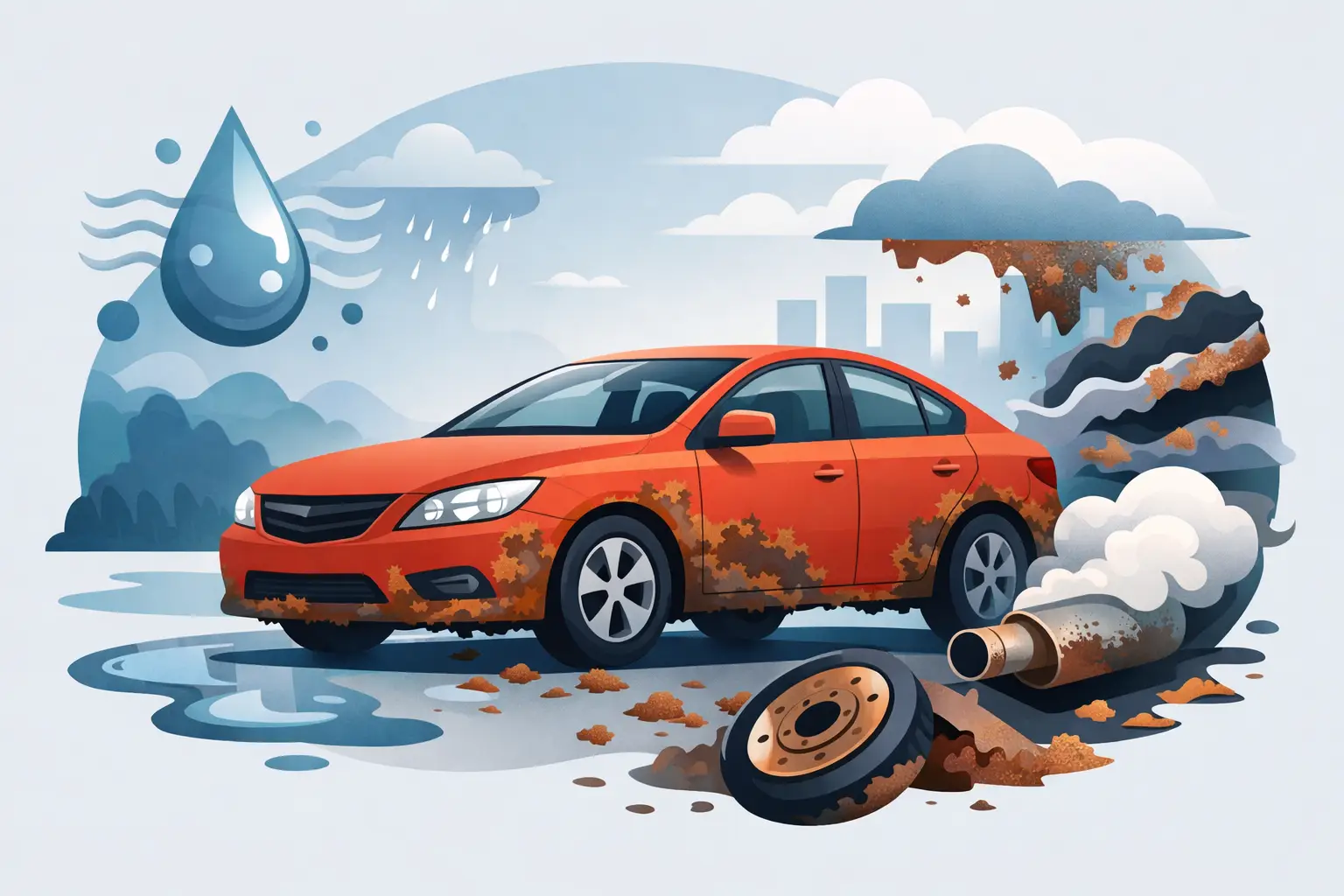
A truck can look clean, glossy, and well kept on the surface while moisture is already working underneath trim, inside seams, and across unprotected metal. That is the problem with humidity corrosion – it rarely announces itself early. By the time you can see bubbling, staining, or flaking, the damage has usually been building for months.
For owners who care about preserving a vehicle, trailer, RV, or boat properly, humidity is not a small issue. It is one of the most overlooked drivers of corrosion because it does not need standing water or obvious neglect to get started. All it needs is moisture in the air, access to metal, and enough time.
What humidity corrosion really is
Humidity corrosion is metal deterioration caused by moisture present in the air. When relative humidity stays high enough, a thin film of water can form on metal surfaces. That microscopic moisture layer becomes an electrolyte, which allows electrochemical reactions to begin. In simple terms, oxygen, water, and metal start interacting, and corrosion follows.
This is why corrosion can develop even when a vehicle is parked indoors or not being driven in the rain. If the environment stays damp, if temperatures swing enough to create condensation, or if contaminants like road salt are present, the conditions become much more aggressive.
Steel is the most obvious concern because rust is visible and destructive, but humidity also affects aluminum, fasteners, brake components, wiring connections, trailer hardware, and marine metal surfaces. Different materials corrode differently, but the trigger is often the same – moisture that stays where it should not.
Why humidity corrosion gets worse in real-world use
In controlled lab conditions, metal behavior is predictable. In the real world, vehicles and marine equipment face far more variables. Humidity alone can start the process, but mixed with contamination, trapped debris, and seasonal temperature changes, corrosion accelerates.
Road salt is one of the biggest multipliers. Salt lowers the moisture threshold needed for corrosion to begin and makes that moisture film more conductive. That means a vehicle exposed to winter roads does not need to be visibly wet to remain at risk. Residue left behind in seams, wheel wells, frame rails, suspension components, and underbody cavities can keep attracting moisture from the air long after the road surface looks dry.
The same pattern shows up with trailers and RVs that sit for extended periods. Storage is often assumed to be protective, but that depends entirely on the storage conditions. A poorly ventilated building, a fabric cover that traps moisture, or repeated warm-cool cycles can create condensation in hard-to-reach areas. Boats face an even more aggressive version of this problem because marine air, dockside humidity, and mineral deposits all add to the exposure.
The first places humidity corrosion starts
Corrosion usually begins where moisture stays trapped, airflow is limited, and maintenance is inconsistent. On vehicles, that often means the underbody, pinch welds, rocker panels, wheel wells, body seams, door bottoms, hood edges, tailgates, mounting points, and around fasteners.
On trailers, exposed frames, couplers, jack assemblies, fender mounts, brake hardware, and wiring connection points are common trouble areas. RVs often develop corrosion around lower body sections, undercarriage components, storage compartment edges, and metal fixtures exposed to repeated damp conditions.
On boats and marine trailers, the problem often centers on hardware, rims, suspension components, bunk brackets, and any metal that sees regular humidity and water exposure without proper treatment.
What makes these areas difficult is that they are not always part of routine washing. Even conscientious owners may clean visible panels regularly while missing the exact places where humidity corrosion is getting established.
Signs you should not ignore
Early corrosion is subtle. Surface discoloration, dull metal, light orange staining near seams, white oxidation on aluminum, or slight swelling around a chip or fastener can all point to moisture activity. These signs matter because they show where protection has failed or where contamination is holding moisture in place.
As corrosion progresses, you may see bubbling paint, flaking scale, seized hardware, weakened brackets, or rust transfer from hidden areas onto visible surfaces. At that stage, the issue is no longer cosmetic. Structural integrity, serviceability, and long-term value start to suffer.
This is where owners often run into an expensive misunderstanding. They assume rust only matters when it looks severe. In practice, the earlier stage is where intervention is most effective. Once metal loss becomes significant, protection turns into repair, and repair is always more involved.
Why newer vehicles are not immune
A newer truck, SUV, trailer, or performance vehicle may have modern coatings and factory corrosion protection, but that does not make it immune to humidity corrosion. Factory protection has limits. Coverage can be uneven in enclosed sections, underbody coatings can be thin in high-impact areas, and transport or dealer prep rarely addresses real long-term environmental exposure.
That is especially true in regions where seasonal moisture, road salt, and storage humidity all come into play. Owners who plan to keep a vehicle for years, tow regularly, store outdoors, or protect resale value need to think beyond the factory baseline.
The trade-off is simple. Waiting until corrosion appears means you are preserving what remains. Protecting early means you are preserving what you paid for in the first place.
How to slow humidity corrosion before it spreads
The right approach depends on the asset, its age, where it is stored, and how it is used. A daily driven pickup in winter needs a different protection plan than a summer-only sports car, a parked RV, or a boat trailer that sees constant launch exposure. Still, the core strategy stays consistent.
First, contamination has to be removed properly. Moisture alone is a problem, but moisture mixed with salt, grime, and road film is far worse. Thorough washing matters, especially in wheel wells, underbody areas, jambs, and seams where residue collects.
Second, surfaces need the right form of protection. For painted panels, ceramic coatings and related exterior protection systems help reduce contamination buildup and make maintenance easier, but they are not underbody rust proofing. They serve a different role. For corrosion-prone metal structures and hidden cavities, dedicated rust prevention products are what matter.
This is where process discipline counts. A professional rust prevention service is not just spraying product where it is easy to reach. The condition of the surface, the product choice, the application pattern, and the treatment of seams, overlaps, and vulnerable components all affect the result. If moisture is already trapped under scale or heavy buildup, that needs to be assessed honestly. Protection works best when the substrate is properly prepared and the expectations are realistic.
Humidity corrosion prevention is not one-size-fits-all
Some owners want the cleanest appearance possible on a newer vehicle. Others are trying to stop an older truck, trailer, or classic from getting worse. Those are different starting points, and the service plan should reflect that.
For a newer asset, the focus is usually early intervention – preserving clean metal, protecting cavities before damage begins, and keeping exterior surfaces easier to wash and maintain. For an older asset, the goal may be to stabilize existing corrosion, slow further spread, and protect vulnerable areas from continued exposure.
Neither approach is wrong. What matters is being clear about what prevention can and cannot do. No product reverses advanced metal loss. No coating fixes neglected seams. Good protection is powerful, but it works best when paired with honest inspection and proper maintenance intervals.
Why craftsmanship matters in corrosion prevention
Humidity corrosion is a slow process, but poor protection work fails quickly. Missed seams, uneven application, contaminated surfaces, and rushed prep all create weak points. That is why certification, product knowledge, and careful execution matter more than marketing claims.
A premium protection service should be methodical. It should account for where moisture sits, where salt collects, how the asset is used, and what materials are being treated. It should also explain the trade-offs clearly. Some products excel in cavity protection. Others are better suited to exposed underbody surfaces. Some owners need annual maintenance. Others may need a lighter touch based on limited use and controlled storage.
That level of detail is what separates meaningful preservation from a quick add-on.
If you want your vehicle, RV, trailer, or boat to hold its condition for the long term, treat humidity as a real corrosion source, not a background detail. The damage starts quietly, but so does the protection that prevents it.
Ready When You Are
Protect What You Drive
Ceramic coating, Waxoyl and Woolwax rust protection, and paint correction in Owen Sound. Get a free quote.