
Precision Ceramics Blog
Truck Undercoating Results Example
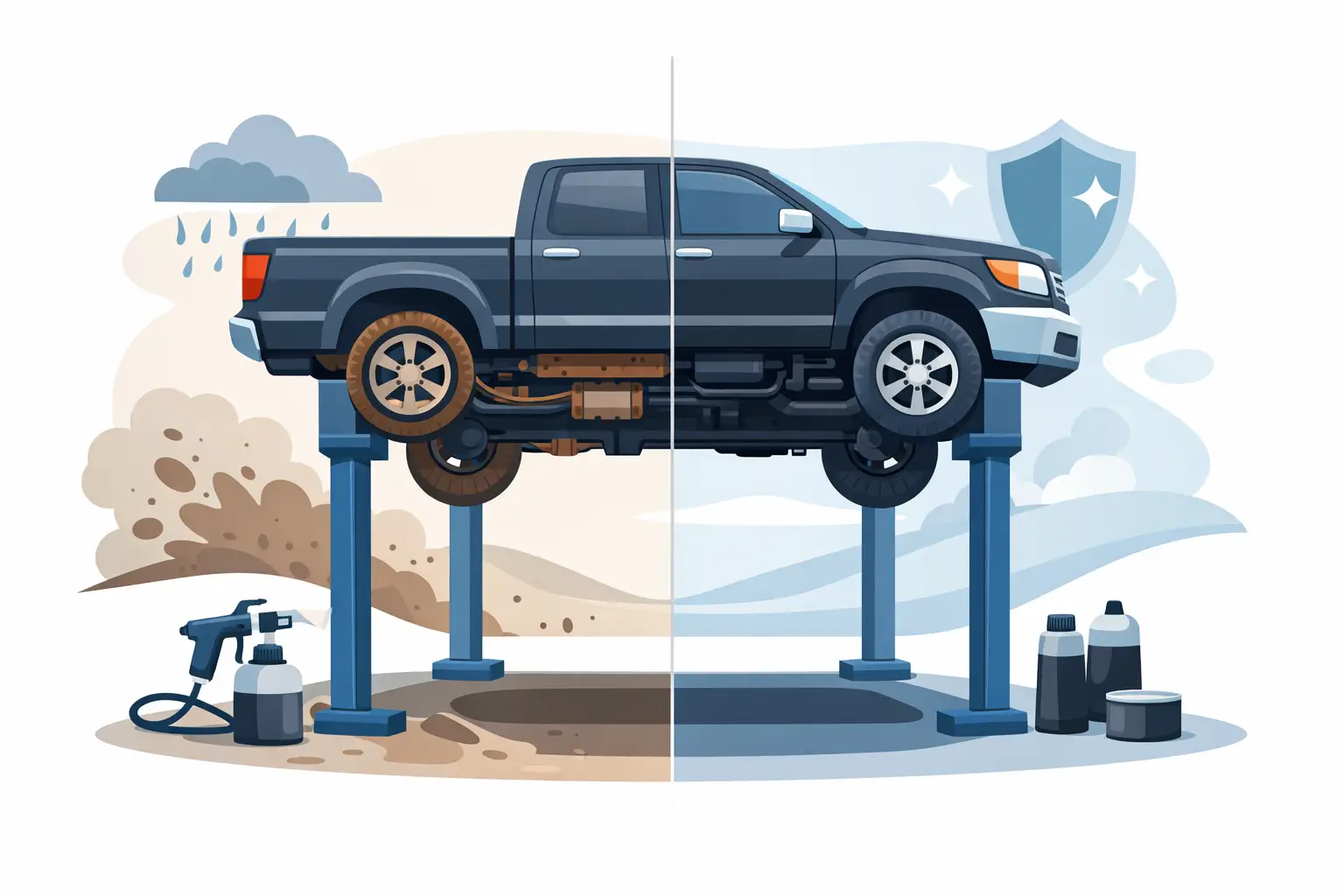
A clean black coating on a truck frame can look impressive on day one, but the real truck undercoating results example shows up months later – after rain, road salt, gravel, and freeze-thaw cycles have had time to test the work. That is where quality undercoating separates itself from a quick spray job. Good results are not just about appearance. They are about slowing corrosion, preserving structural metal, and keeping vulnerable areas protected where rust usually starts.
For truck owners who plan to keep their vehicle, this matters more than most dealership add-ons ever admit. Undercoating is not magic, and it does not reverse advanced corrosion. What it can do, when the vehicle is properly assessed and prepared, is create a barrier that helps reduce moisture intrusion and salt exposure in the areas that take the worst abuse.
What a real truck undercoating results example looks like
The most useful example is not a brand-new truck with a glossy frame and no exposure history. It is a truck that has already seen real use and is starting to show the early signs of what Ontario roads, wet gravel, and winter salt can do. In that case, the before-and-after change is usually most visible in the frame rails, crossmembers, weld seams, suspension mounting points, brake and fuel line areas, and the inner surfaces that do not get cleaned often enough through normal washing.
Before treatment, these areas often show dry surface rust, dull brown oxidation, packed debris, and inconsistent factory coverage. Factory coatings can leave seams, edges, and hidden cavities more exposed than most owners realize. That is one reason newer trucks can still begin rusting earlier than expected.
After professional undercoating, the visual result should be even, deliberate, and controlled. The coating should reach the areas that matter, not just the easy-to-see surfaces. Cavities and seams should be treated with purpose. The finish may appear darker and more uniform, but the real value is that the metal is better isolated from moisture and corrosive road contamination.
That said, realistic results depend on starting condition. If a truck already has scaling rust, flaking metal, or years of trapped corrosion, undercoating becomes part of a management strategy, not a reset button. A skilled shop should be clear about that.
Why prep determines truck undercoating results example quality
The biggest difference between average and premium undercoating results is preparation. This is where many low-cost applications fail. Spraying over dirt, wet surfaces, road film, or active loose corrosion might make the underside look darker for a while, but it does not create durable protection. In some cases, it can trap contamination where it should have been removed.
Proper preparation starts with inspection. Not every truck needs the same approach. A newer pickup with minimal oxidation needs a different level of correction than an older work truck that has already seen multiple winters. The condition of the steel, existing rust, drainage points, exposed welds, and previous coatings all affect the process.
Once the underside is evaluated, cleaning and drying become critical. Mud, salt residue, and oily buildup need to be removed from the surfaces that will be treated. Moisture cannot be ignored. Applying corrosion protection over damp metal is one of the fastest ways to reduce product performance.
At Precision Ceramics, this attention to preparation is what separates lasting protection from a cosmetic shortcut. Professional-grade products such as Waxoyl and Woolwax perform best when the surface and application process are handled with discipline, not speed.
What improves after undercoating
The first improvement is obvious – exposed metal looks protected rather than vulnerable. But the better result is what happens over time. Areas that would normally begin turning more aggressively orange or flaky through winter exposure tend to remain more stable when the coating is maintained correctly.
Owners also notice that the underside is easier to inspect and maintain because critical surfaces are no longer left bare or inconsistently covered. Fasteners, seams, brackets, and hard-to-reach pockets are often where early corrosion gains momentum. When these areas are properly treated, the truck has a better chance of aging in a controlled way instead of deteriorating unpredictably.
For newer trucks, the result is preservation. You are trying to stay ahead of rust before it becomes expensive. For older trucks, the result is often stabilization. You are trying to slow progression, protect what is still solid, and avoid letting minor rust become structural damage.
There is also a resale factor. Buyers who know trucks can tell the difference between a neglected underside and one that has been cared for. They may not expect perfection, but they do look for signs that the owner took corrosion prevention seriously.
What undercoating does not fix
This is where honest expectations matter. Undercoating does not make rust disappear. It does not restore heavily compromised steel. It does not permanently protect a truck after one visit with no follow-up. And it should never be used to hide severe corrosion from an informed inspection.
If a truck has active scaling, peeling factory coatings, or areas where corrosion has already advanced into seams and structural sections, the result may still be worthwhile, but it will be limited by the existing condition. Good undercoating helps preserve what can still be protected. It cannot replace metal that has already weakened.
This is also why annual review matters. Road exposure, washing habits, climate, and mileage all affect how well the protection holds up. A truck that sees frequent highway salt and wet slush needs a different maintenance mindset than one used lightly through fair weather.
The difference between a spray job and a protection system
A rushed application focuses on coverage. A proper service focuses on access, adhesion, penetration, and retention. Those are not the same thing.
Products like Woolwax and Waxoyl are designed to creep into seams and vulnerable spaces while maintaining a protective film. That matters because rust rarely starts on the broad, visible face of a frame. It starts in joints, folds, pinch points, and inside cavities where water and salt stay longer than they should.
A real results-based approach also respects sensitive components. Undercoating should be applied with control around exhaust, brakes, and other areas where overspray or poor product placement creates problems instead of protection. Precision is not a luxury here. It is part of doing the job properly.
When the best results happen
The strongest truck undercoating results usually come from starting early. If a truck is treated before multiple winters have a chance to establish corrosion, the long-term payoff is much better. You are protecting clean metal instead of trying to manage damage that has already spread.
That does not mean older trucks are poor candidates. Many still benefit significantly, especially when the goal is to preserve frame integrity and slow future deterioration. The key is honesty about where the truck stands today and what success should look like from this point forward.
For truck owners in areas where winter roads are heavily treated, timing matters. Applying protection before the harsh season begins gives the coating the best chance to guard vulnerable surfaces right when they need it most. Waiting until rust becomes obvious usually means some preventable damage has already occurred.
How to judge undercoating results over time
Do not judge the job only by the first week. Look at how the truck presents after a season of use. Are the previously exposed areas still protected? Has new rust development slowed? Do seams, welds, and hidden areas still show consistent coverage? Is the underside easier to keep in better condition than before?
Those are the questions that matter.
The best undercoating result is often quiet. Less spreading rust. Fewer ugly surprises during maintenance. Better long-term condition in the places most owners never see until damage is already expensive. That is the value of a professional process done with the right materials and realistic expectations.
If you are considering undercoating for your truck, ask to see the condition-specific approach, not just a shiny finished photo. The real proof is in how the product is selected, how the preparation is handled, and whether the work is designed to protect your truck for the road ahead, not just for the day it leaves the shop.
Ready When You Are
Protect What You Drive
Ceramic coating, Waxoyl and Woolwax rust protection, and paint correction in Owen Sound. Get a free quote.